Why D2C Brands Should Have Their Own Shakers and Drinking Bottles
Why D2C Brands Should Have Their Own Shakers and Drinking Bottles
Direct-to-consumer (D2C) brands face a particular challenge: they have to build strong brand loyalty without a physical shop presence. In a world where digital brands fight for attention, physical merchandise can become a differentiator. Branded drinking bottles and shakers lend themselves to this.
The D2C dilemma: a digital brand, physical contact
D2C brands exist primarily online. Their customers interact through websites, apps and social media. Yet a physical brand contact works differently from a digital one: you can hold it in your hand, and it does not disappear with the next scroll. Which raises the question: how do you create physical touchpoints without shops of your own?
The answer: branded products that customers use every day.
A shaker or drinking bottle carrying your logo becomes a daily companion — at the office, at the gym, out and about. Every use is a brand contact that stays present in everyday life.
Five reasons for D2C drinking bottles
1. A physical brand touchpoint
In a digital world, a physical product is an anchor. Your customers hold something that connects them to your brand — literally. That tactile contact can create an emotional bond that a purely digital experience struggles to match.
2. A new source of revenue
Branded drinking bottles can be sold as a product in their own right in a D2C shop:
| Revenue channel | Strategy | Possible goal |
|---|---|---|
| Upselling | Offered at checkout as an add-on | Higher order value (AOV) |
| Bundles | Bottle plus main product as a set | Higher perceived value |
| Subscription extra | A free shaker when a subscription starts | Lower churn rate |
| Limited editions | Seasonal designs as collectables | FOMO effect, social shares |
As described in our guide to white-label products, the margins on white-label merchandise are attractive.
3. A community builder
D2C brands live off their community. A branded shaker can become a visible sign of belonging — a fan shirt for your brand:
- Customers post photos with your shaker on social media
- User-generated content appears organically
- Community members recognise each other
4. Higher customer lifetime value
A shaker in the cupboard is a daily reminder of your brand. That can contribute to:
- A higher repeat purchase rate
- Longer customer retention
- More recommendations (word of mouth)
5. A better unboxing experience
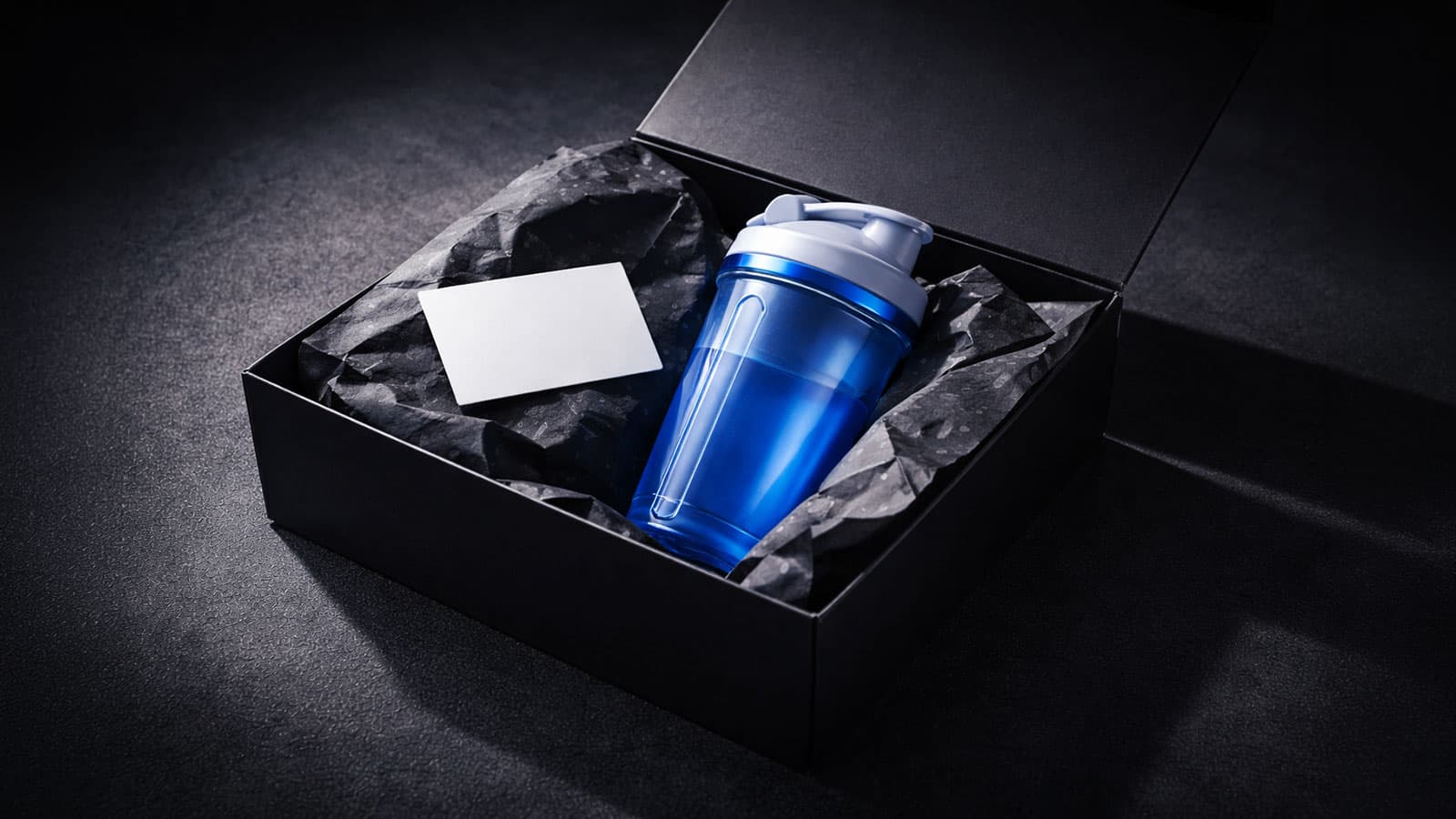
D2C brands invest heavily in the unboxing experience. A branded shaker included with a first order can lift the unpacking — ideally to the point where customers share it on social media.
Ideas from the D2C world
Supplement D2C brands
For supplement brands, a branded shaker is an obvious fit, because it is used together with the product. Possible uses:
- A shaker included with the first order
- A high-quality shaker as a subscription incentive
- Limited editions as collectables
Food D2C brands
It can suit food start-ups too:
- Smoothie brands could send out branded shakers for mixing
- Drinks start-ups could include a drinking bottle with their logo
- Protein bar brands could add a shaker to the parcel
Lifestyle D2C brands
Even D2C brands with nothing to do with food can benefit:
- Fitness apps could add a shaker to the starter pack
- Coaching platforms could use drinking bottles as a gift
- Sustainability brands could turn to reusable bottles
An implementation strategy for D2C brands
Step 1: Choose the right product
Pick a product that fits your brand. Explore the options in our product overview.
Step 2: Develop the design
Your shaker design should:
- Show your logo prominently but elegantly
- Match your brand's colour palette
- Look good on social media (think about Instagram photos)
- Give people something to talk about
Step 3: Integrate it into the shop
- Product page: a "Merch" or "Accessories" category of its own
- Checkout upsell: "Add a shaker at a special price?"
- Bundle offers: product plus shaker as a set
- Subscription integration: the shaker as a welcome gift
Step 4: Activate the marketing
- Influencer collaborations featuring your shaker
- User-generated content through a hashtag campaign
- Unboxing videos on TikTok and YouTube
- Email marketing: "Your welcome shaker is waiting"
ROI for D2C brands
Investing in branded drinking bottles can pay back through several levers:
| ROI lever | Possible effect | Measurement |
|---|---|---|
| Direct revenue | Sold as a product in its own right | Shop revenue |
| Higher AOV | The shaker as an upsell raises order value | Checkout data |
| Retention | Daily brand contact extends the relationship | Cohort analysis |
| Acquisition | Word of mouth through visible merchandise | Referral tracking |
| Content | User-generated content for social media | UGC volume |
Practical tip: One possible lever is the subscription extra — a free shaker at the start of a subscription immediately puts something in new customers' hands that they use every day. Whether that lowers your churn rate is something you can measure yourself with a simple A/B test in your own shop.
In summary: think physically in a digital world
For D2C brands, branded merchandise is not a nice-to-have — it can be a strategic lever for brand loyalty, revenue and community building. Drinking bottles and shakers combine utility, visibility and brand association.
Are you a D2C brand looking to launch your own merchandise? We help you find the right shaker or drinking bottle for your shop. Send us an enquiry — free and without obligation.