BPA-Free: What Does It Mean and Why Does It Matter?
BPA-Free: What Does It Mean and Why Does It Matter?
Anyone dealing with drinking bottles, shakers, or food packaging will sooner or later come across the term BPA-free. But what exactly does it mean? And why is it so relevant for B2B buyers looking to bring their own products to market? In this article, we explain the science behind BPA, the applicable regulations, and the practical implications for your business.
What Is BPA?
BPA stands for Bisphenol A — a chemical compound that has been used in plastic manufacturing since the 1960s. BPA is a key building block in the production of polycarbonate plastics and epoxy resins. These materials are found in a wide range of everyday products:
- Drinking bottles and shakers
- Food containers and storage boxes
- Inner linings of canned goods
- Thermal paper (e.g. receipts)
- Medical devices
The problem: under certain conditions, BPA can leach out of plastic — particularly when exposed to heat, acid, or mechanical stress. It then migrates into the liquid or food stored in the container.
Good to know: BPA leaches particularly easily when hot liquids are stored in plastic containers — the higher the temperature, the more migration increases.
What Are the Health Risks of BPA?
Bisphenol A belongs to a group of substances known as endocrine disruptors. This means it can interfere with the human body's hormonal system. Numerous scientific studies have examined possible links between BPA exposure and a variety of health problems. The table below provides an overview of the key risk areas.
| Risk Area | Possible Effect | Groups Affected |
|---|---|---|
| Hormonal disruption | Oestrogen mimicry, hormonal imbalance | Men, women, children |
| Reproductive health | Reduced fertility, sperm quality | Adults of both sexes |
| Cardiovascular | Elevated blood pressure, vascular damage | General population |
| Metabolic | Type 2 diabetes, obesity | Long-term exposed individuals |
| Neurological effects | Developmental brain disorders | Children, unborn babies |
| Early puberty | Premature sexual maturity | Children |
The European Food Safety Authority (EFSA) drastically lowered the tolerable daily intake (TDI) for BPA in 2023 — by a factor of 20,000 compared to the previous value. This underlines how seriously the scientific community takes this issue.
Regulatory Framework in Europe
The EU has already taken important steps to protect consumers from BPA. The regulatory landscape is tightening continuously — for businesses, this means: companies that are not producing BPA-free products today risk costly transitions tomorrow.
| Year / Regulation | Measure | Scope |
|---|---|---|
| Since 2011 | BPA banned in baby bottles | EU-wide |
| Since 2018 | BPA banned in all food contact materials | France |
| EU Regulation 2018/213 | Strict migration limits for BPA | EU-wide |
| In preparation | Comprehensive BPA ban in all food contact materials | EU-wide |
For companies distributing white-label products, this means: BPA-free products are no longer an option — they are a necessity.
What Does BPA-Free Actually Mean?
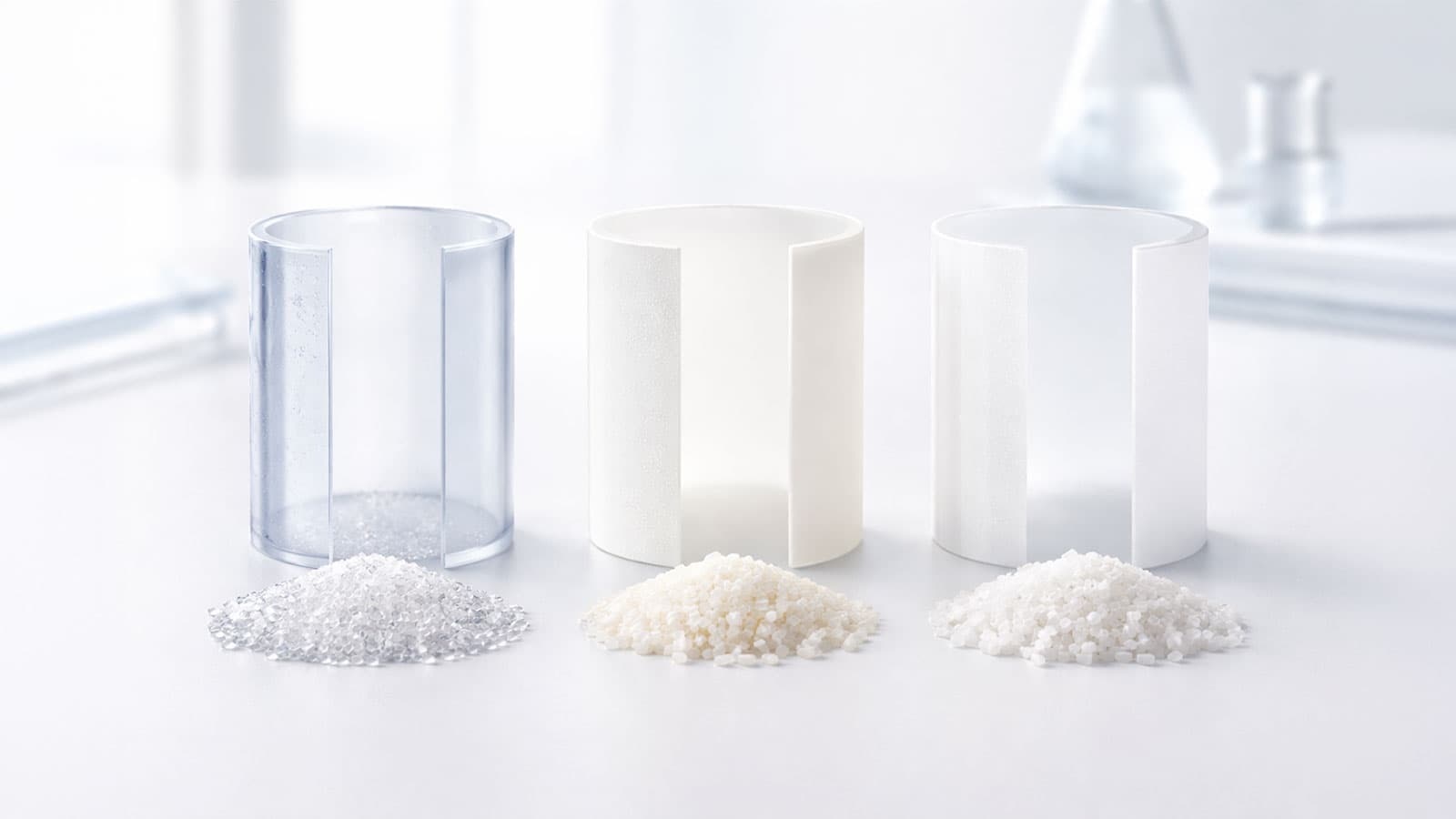
The BPA-free label means that Bisphenol A has been deliberately excluded from the manufacturing process. Alternative materials are used instead:
Common BPA-Free Materials
Five materials have established themselves as BPA-free alternatives on the market. The table below gives an overview of their respective strengths and typical applications.
| Material | Properties | Typical Use |
|---|---|---|
| Tritan (copolyester) | Transparent, shatter-resistant, taste-neutral | Drinking bottles, shakers |
| Polypropylene (PP) | High temperature resistance | Containers, shaker bodies |
| Polyethylene (PE) | Flexible, lightweight, cost-effective | Lids, closures |
| Stainless steel | Completely BPA-free, durable | Insulated bottles, premium shakers |
| Glass | Chemically inert, naturally BPA-free | Drinking bottles, laboratory containers |
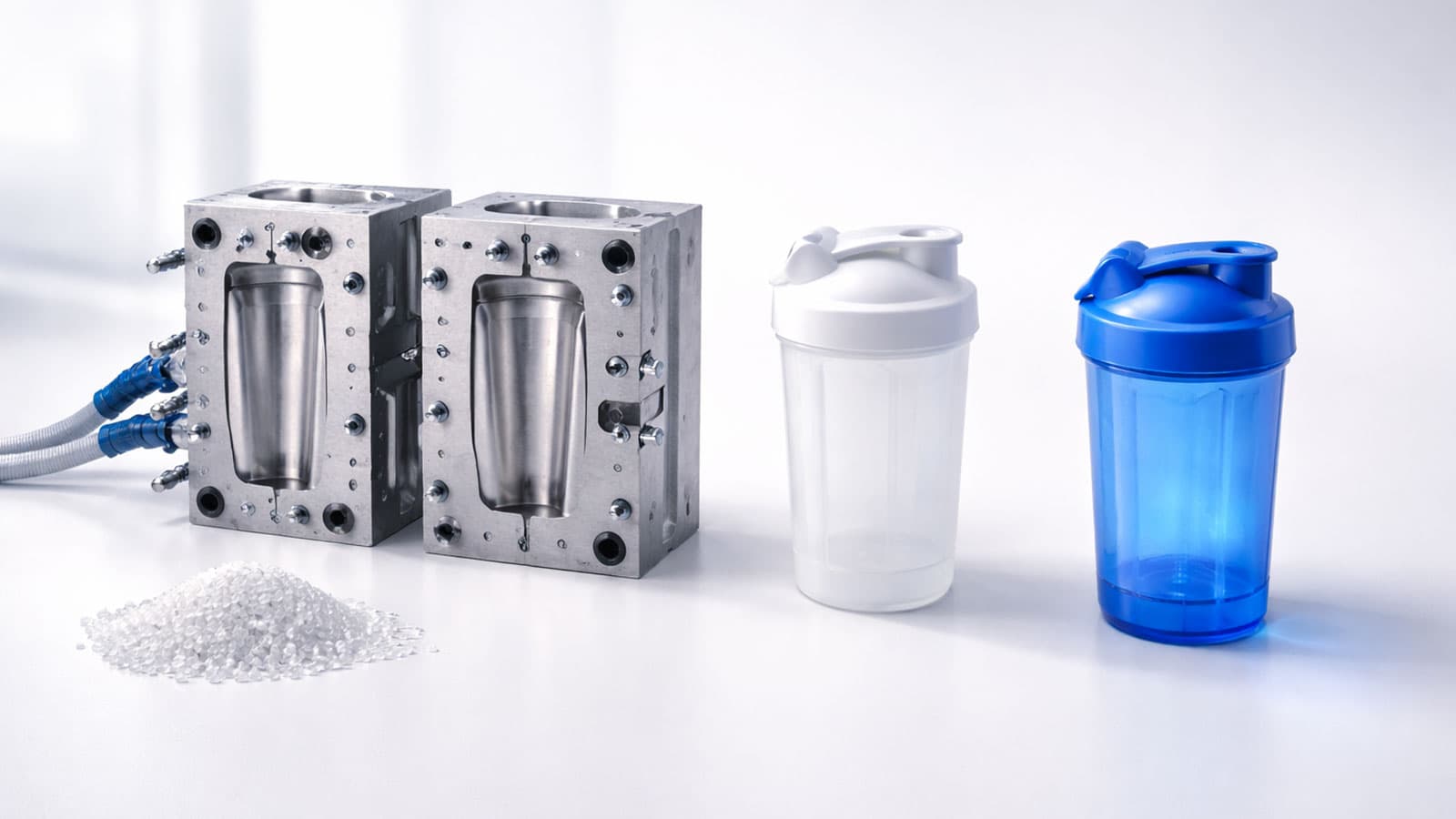
Practical tip: For white-label shakers we work with polypropylene (PP) — BPA-free, dishwasher-proof and well suited to screen printing. You will also come across Tritan frequently on the market; in either case what matters is the proof of food-contact compliance.
You can find a detailed comparison of the different materials in our article Tritan, PP or PE? The Ultimate Material Comparison for Shakers.
Why BPA-Free Is Critical for Your B2B Business
As a company selling drinking bottles or shakers under your own brand, there are several compelling reasons to exclusively use BPA-free products:
1. Consumer Safety and Trust
End consumers are increasingly focused on health and safety. For many buyers, the BPA-free label is a purchasing criterion when choosing drinking bottles.
2. Legal Protection
With tightening EU regulations, you protect yourself against future bans and potential liability risks. Companies that are already producing BPA-free today will not need to make costly adjustments later.
3. Brand Reputation
A product recall or negative press coverage due to BPA contamination can permanently damage trust in your brand. BPA-free products are an active contribution to brand protection.
4. Competitive Advantage
Many wholesalers and retailers now explicitly require BPA-free products. Without the appropriate certification, important distribution channels will remain closed to you.
What to Look for in BPA-Free Products
Not all BPA-free labels are equal. The checklist below shows which quality criteria you should look for when making your selection.
| Quality Criterion | What to Check | Why It Matters |
|---|---|---|
| Independent laboratory tests | Certificates from SGS, TÜV or equivalent institutions | Objective proof of BPA-free status |
| EU Declaration of Conformity | Evidence under EU Regulation 1935/2004 | Legal requirement for food contact materials |
| Migration tests | Testing for substance transfer into food | Ensures everyday safety |
| BPA- and BPS-free | Absence of both substances confirmed | Some manufacturers replace BPA with equally concerning BPS |
Good to know: Pay particular attention to the label "BPA- and BPS-free." The label "BPA-free" alone does not rule out the use of BPS (Bisphenol S) as a replacement material, which raises comparable health concerns.
These certifications play a central role in choosing the perfect shaker for your brand.
BPA-Free at VYTE LABEL
At VYTE LABEL Industries, we use BPA-free materials. Our products are manufactured from BPA-free plastics. Which documents are available for a given item — material certificates, declaration of conformity, test reports — we will tell you on request.
| What You Get From Us | Details |
|---|---|
| BPA-free materials | We deliberately select BPA-free plastics for our products |
| EU-compliant materials | Documentation under EU Regulation 1935/2004, where available |
| Confirmation of BPA-free production | On request |
| Manufactured in the EU | Our shakers are produced in the EU |
Conclusion
BPA-free has long been more than a marketing trend — it is a fundamental quality standard that protects consumer health and is economically indispensable for B2B companies. Investing in BPA-free drinking bottles and shakers today means investing in customer safety, regulatory compliance, and long-term business success.
Would you like to offer BPA-free drinking bottles or shakers under your own brand? Our team will advise you on materials, certifications, and production options. Get in touch now — for every material we will provide you with the conformity documents available.