Custom Printed Shakers: The Complete Price Guide 2026
Custom Printed Shakers: The Complete Price Guide 2026
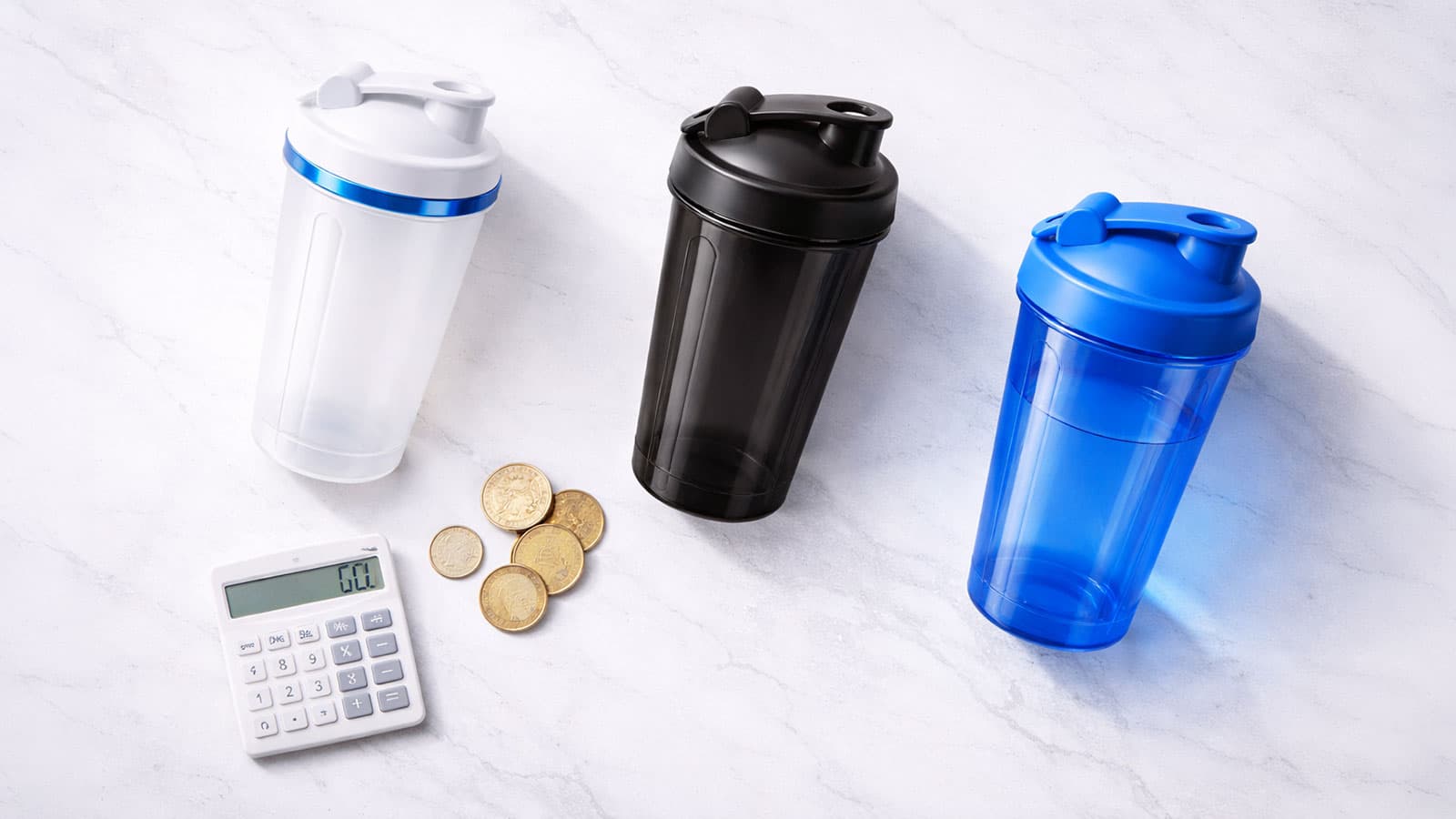
One of the most common questions we hear at VYTE LABEL: "How much does it cost to print custom shakers?" The honest answer: it depends — because four factors determine the final price. In this guide, we break down every cost factor transparently so you can budget your order accurately from day one. No vague estimates, just clear logic you can act on.
The Four Pricing Factors
Every quote for printed shakers consists of four building blocks: quantity, printing method, material, and packaging. Understanding these four levers lets you optimise your costs strategically and avoid unpleasant surprises. The following sections explain each factor in detail — with comparison tables so you can make well-informed decisions.
1. Quantity — the Biggest Lever
Order quantity has the strongest impact on unit price. The reason lies in setup costs: printing plates must be created, colours mixed, and machines calibrated — regardless of whether you order 210 or 5,000 units. The higher your order volume, the more these fixed costs spread across individual units. From around 500 units, the per-unit difference becomes clearly noticeable; from 1,000 units, you are in the optimal range for most B2B customers.
| Quantity Range | Price Effect | Recommended For |
|---|---|---|
| Up to 500 units | Entry-level pricing, highest unit cost | Market tests, first batch, events |
| 500–1,000 units | Noticeable per-unit savings | Small to medium campaigns |
| 1,000–5,000 units | Optimal price-volume range | Most B2B customers |
| 5,000+ units | Bulk pricing, maximum discount | Large accounts, subscription models |
Rule of thumb: As the quantity rises, the unit price falls, because the one-off setup costs are spread across more units. How much it falls depends on the product, the motif and the number of colours — we will give you the exact volume price in your quote. If you are planning long-term, a larger initial order can save money — especially when a reorder is already foreseeable.
2. Printing Method
The chosen printing method affects not just the price but also the look and durability of your design. The difference between the cheapest and most expensive method can account for 20–40% of the unit price at small quantities. That makes it worth examining the three common methods closely — and asking what your specific design actually requires.
| Method | Cost | Colour Range | Ideal For | Durability |
|---|---|---|---|---|
| Screen printing | Most affordable | 1–3 colours | Logos, text, simple graphics | Very high — dishwasher safe and abrasion resistant |
| Pad printing | Mid-range | 1–4 colours | Curved surfaces, fine details, small motifs | High — slightly more sensitive to abrasion |
| UV printing | Most expensive | Unlimited (CMYK) | Photorealistic designs, gradients, full-wrap | High — UV-cured, scratch-resistant |
Tip: For most B2B applications, screen printing is more than sufficient. Only invest in UV printing if your design absolutely requires gradients or photorealistic elements. We ourselves print exclusively using special screen printing — including all-round printing over 305° on request. Pad printing, UV direct printing and laser engraving are not among our methods. Read more in our printing method comparison.
3. Material and Shaker Type
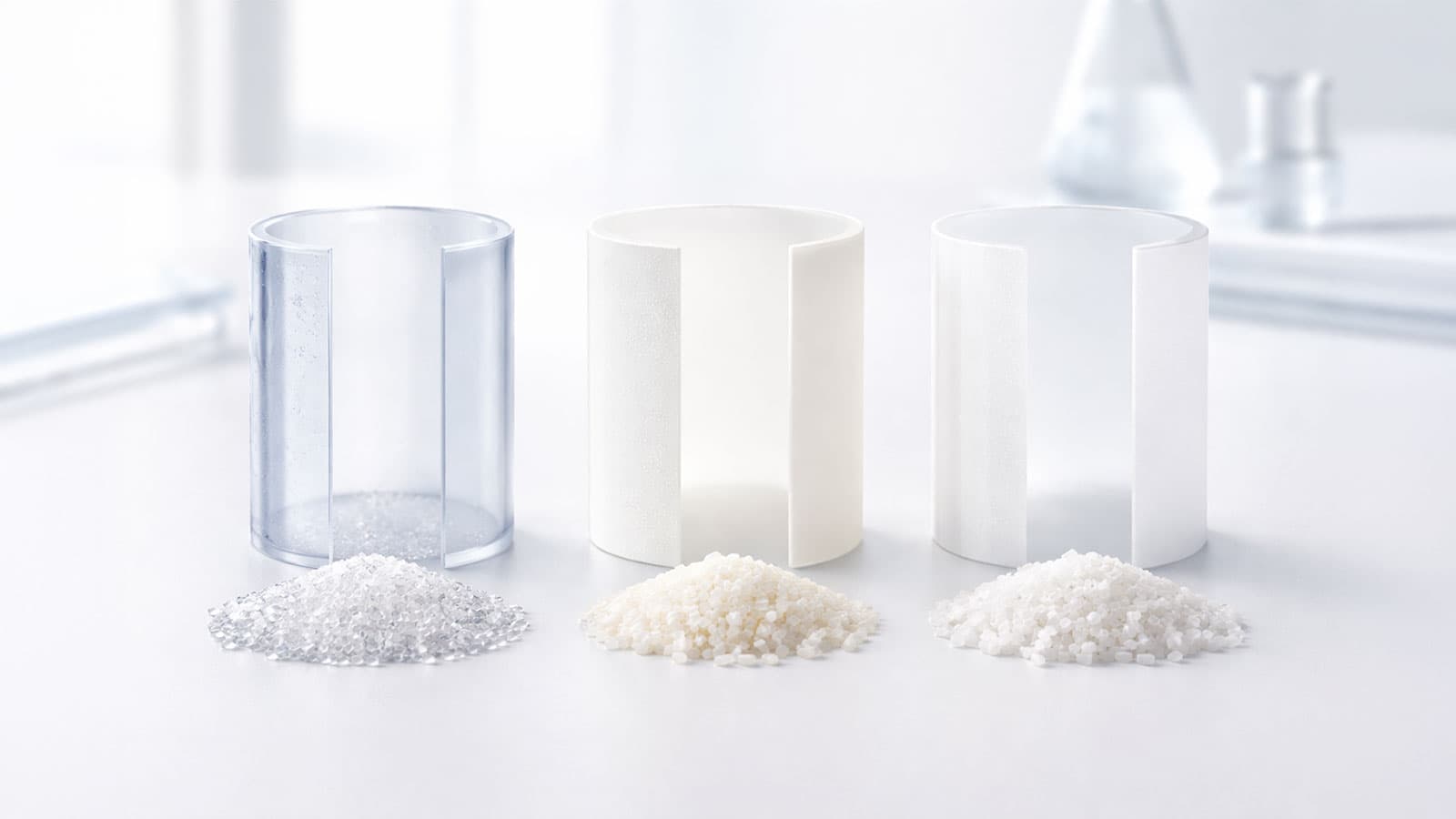
The base product determines the base price. The higher the material quality, the higher the starting price — but customer perception rises accordingly. Across the industry, the range extends from standard plastic to Tritan and stainless steel bottles. Our own range is deliberately focused on PP (polypropylene): BPA-free, light and dishwasher safe, available either translucent or opaque. With us, the premium effect comes above all from the choice of colour and the print design — from a single-colour logo to an all-round motif.
| Material | Price Level | Appearance | Durability | Weight |
|---|---|---|---|---|
| Standard PP (polypropylene) | Affordable (base price) | Slightly translucent, sporty | Robust, BPA-free, everyday use | Very light (~120 g) |
| Tritan (copolyester) | Medium to high (+30–50%) | Crystal clear, premium look | Shatterproof, dishwasher safe | Light (~140 g) |
| Stainless steel | Premium (well above the base price) | Metallic, long-lasting look | Highest durability, double-wall possible | Heavier (~280 g) |
4. Packaging and Shipping
Often underestimated but genuinely relevant for the total cost calculation. Especially with premium positioning or event use, packaging can account for a noticeable share of total costs. Clarify early what packaging level your brand requires — this also affects logistics costs:
- Standard packaging (polybag): Included in the base price
- Individual boxing (carton with logo): Per-unit surcharge, ideal for retail
- Gift packaging: For premium clients, subscriptions, or event giveaways
- Shipping: Depends on quantity, weight, and destination — European production shortens delivery routes
Price Examples (2026 Benchmarks)
The following prices are benchmarks and may vary depending on your specific configuration. They give you a solid foundation for budget planning. The euro signs represent relative price categories — you will receive your individual quote after a brief enquiry.
| Configuration | 210 units | 500 units | 1,000 units | 5,000 units |
|---|---|---|---|---|
| PP shaker, 1-colour screen print | €€ | €€ | € | € |
| PP shaker, 2-colour screen print front and back | €€€ | €€ | €€ | € |
| PP shaker, all-round print 305° (1 colour) | €€€ | €€ | €€ | €€ |
| PP shaker, all-round print 305° (2 colours) | €€€€ | €€€ | €€€ | €€ |
Good to know: You will receive concrete euro amounts in your personal quote. We calculate each order individually because factors like colour count, motif size, and delivery address influence the final price. Request your no-obligation quote now — we will get back to you shortly.
How to Save on Your Order
A few strategic decisions can stretch your budget significantly without sacrificing quality. These five levers will help you do exactly that:
- Order larger quantities: The unit price drops noticeably from 500 units — check whether a larger initial order is cheaper long-term than two smaller batches
- Choose a simple print design: 1–2 colours in screen print rather than photorealistic full-wrap — most strong brand logos work brilliantly with few colours
- Use standard colours: Special colours (Pantone matching) require custom mixing at extra cost
- Plan ahead: Short-notice production is usually more expensive than the regular process — ordering in time saves real money. We will tell you the realistic time frame for your project in the quote
- Use reorders: For repeat orders with an unchanged motif, the print templates already exist — what that means for the setup costs is something we clarify with you in the quote
Tip: Combine several measures: a PP shaker with 1-colour screen print in a standard colour from 500 units delivers the best ratio of cost to impact. That is a good starting point — a more elaborate print design can always be added on a reorder.
Hidden Costs to Watch For
Not every supplier is transparent about pricing. Before you accept a quote, clarify the following points — because this is where hidden surcharges often lurk, relativising the seemingly low unit price:
- Setup/plate costs: Are these charged separately or included in the unit price?
- Sample costs: Are pre-production samples free or chargeable?
- Shipping costs: Delivery ex-works (EXW) or delivered duty paid (DDP)?
- Minimum order surcharges: Are there extra fees below a certain quantity threshold?
Important: Always compare total costs including all ancillary items — not just the bare unit price. A low unit price with high setup and shipping costs can be more expensive than a seemingly higher quote with no hidden fees. At VYTE LABEL, you will find every cost item — unit price, setup costs, packaging and shipping — itemised separately in the quote.
Conclusion: How to Calculate Correctly
The price for printed shakers is no mystery — it follows logically from quantity, printing, material, and packaging. Understanding these four factors lets you optimise strategically and get the best value for your budget.
Our advice for newcomers: start with a manageable quantity in standard material to test the market. How small that first batch can be depends on the product — we will tell you the binding minimum order quantity for the product in question. Use customer feedback to refine design and material for the reorder — and benefit from the better unit prices that come with the larger quantity.
Ready for your personal quote? Start your enquiry now — we will calculate your individual price and get back to you promptly with a quote. Or explore our shakers and bottles overview first.