White Label vs. Private Label: What Is the Difference?
White Label vs. Private Label: What Is the Difference?
When exploring own-brand products, you quickly encounter two terms: white label and private label. Both allow you to sell products under your own name — but the approach differs fundamentally. This article breaks down the differences, pros and cons of each model, and helps you decide which path is right for your business.
White Label: Ready Product, Your Branding
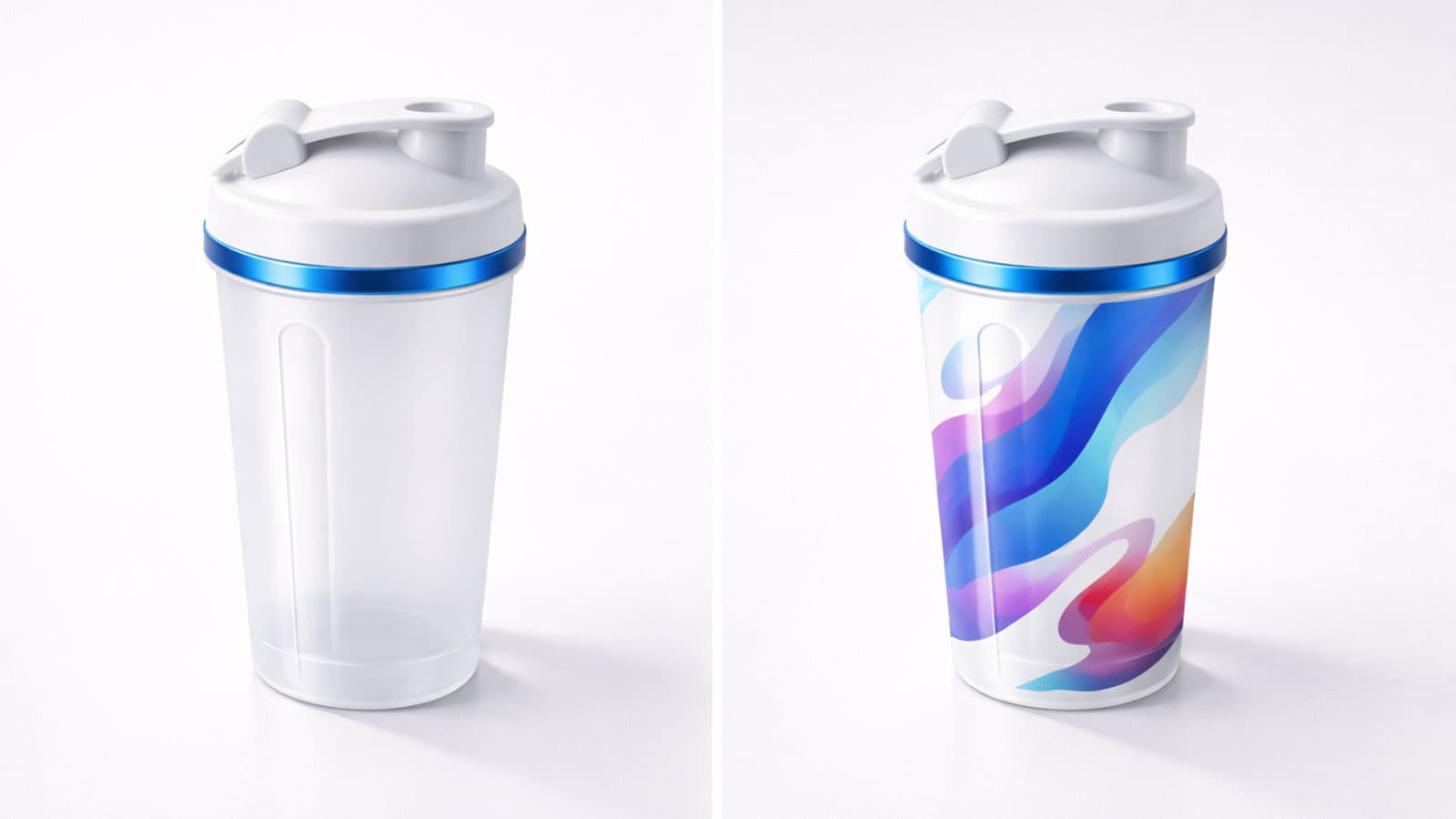
With white label, you select an existing standard product from a manufacturer's catalogue. The product is already developed, tested, and production-ready. You simply add your branding — logo, colours, possibly custom packaging. The manufacturer handles production and quality, while you focus on marketing and sales.
A typical example: you want to offer protein shakers under your brand. At VYTE LABEL, you choose a proven 700 ml PP shaker, have your logo applied via screen printing, and receive a finished branded product made in Europe. The binding minimum order quantity is shown with each product in the configurator, and we state the delivery time in your quote — it depends on the run size and the scope of the printing.
Private Label: Custom-Made to Your Specifications
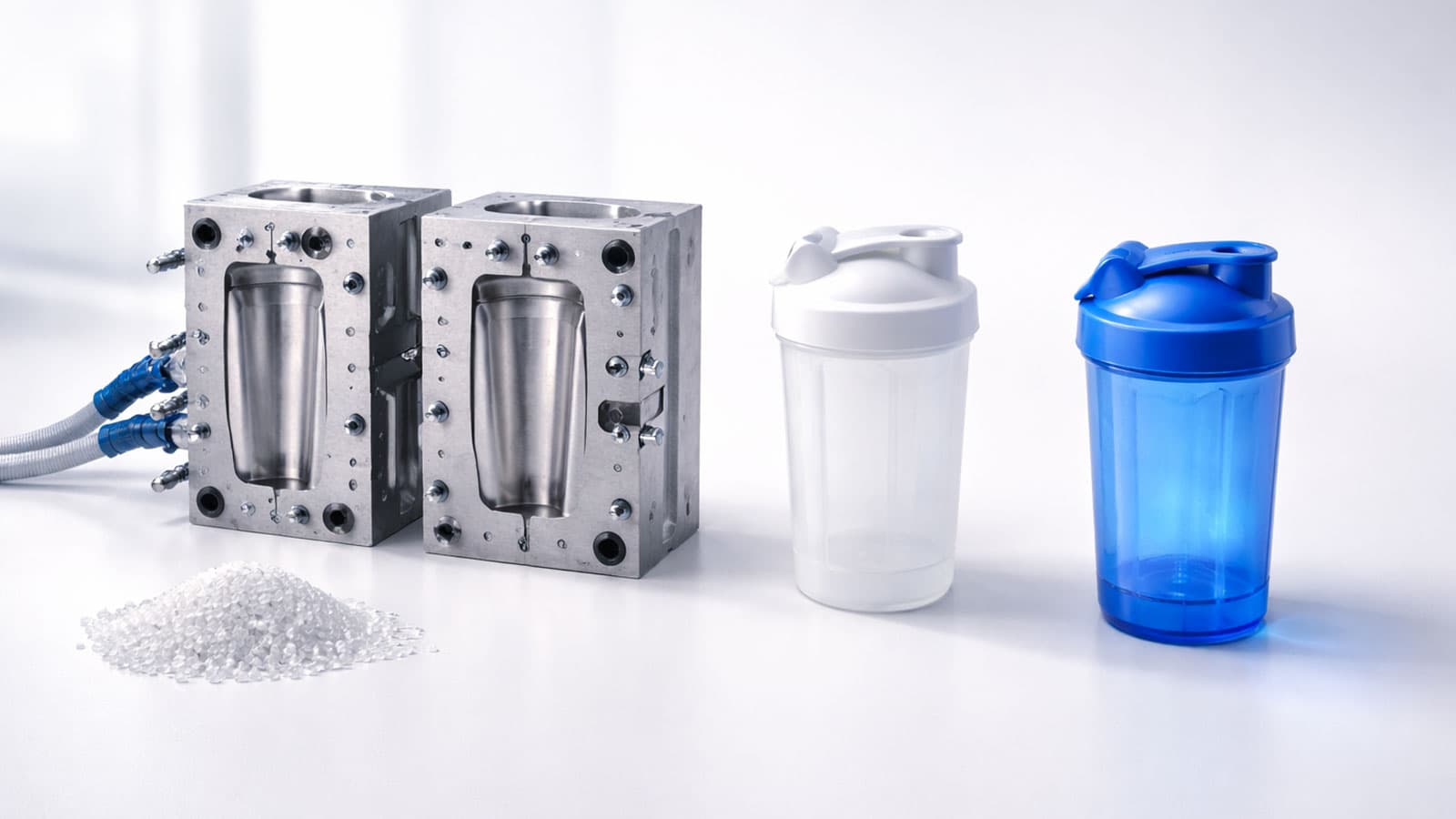
With private label, you have a product developed and produced exclusively to your specifications. You determine everything: shape, material, colour, technical details, closure type — every detail is implemented according to your brief. This requires a product development phase with prototypes and tooling costs.
An example: an established fitness brand wants a shaker with an integrated supplement compartment, a special grip shape, and a patented closure. Custom moulds are produced, prototypes tested, and the design refined through several iterations — a process spanning 3–6 months.
Direct Comparison
Before diving into the details, this overview shows the key differences at a glance:
| Criterion | White Label | Private Label |
|---|---|---|
| Product base | Existing standard product | New development to your specs |
| Customisation | Logo, colours, packaging | Everything: shape, material, engineering, design |
| Development time | None | 2–6 months |
| Entry costs | Low (no tooling required) | Medium to high (tooling + development) |
| Minimum order quantity | Low, depends on the product | Higher (often from 1,000–5,000 units) |
| Exclusivity | No — others use the same base product | Yes — unique product only for you |
| Risk | Low (product is proven) | Medium (product is untested) |
| Time-to-market | 6–8 weeks | 3–6 months |
The key difference lies in the depth of customisation: white label adapts the surface, private label reshapes the entire product. Both models have their place — depending on your starting situation.
Good to know: In practice, the boundaries are fluid. Many manufacturers offer intermediate options — such as colour variants of the base product or custom closures on standard bodies. Ask specifically about the possibilities.
Pros and Cons in Detail
To compare the strengths and weaknesses of both models directly, we have summarised them in a single table:
| Aspect | White Label | Private Label |
|---|---|---|
| Speed | Very fast — production can start immediately | Slow — development takes months |
| Cost | Low — no tooling or development costs | High — tooling, prototypes, iterations |
| Quality control | Product is proven, quality is known | Risk with initial production, testing phases needed |
| Differentiation | Limited — competitors can use the same base product | Maximum — unique product on the market |
| Scalability | Flexible — small and large quantities possible | Economical only at high volumes |
| Risk | Low — proven product, small quantities | Medium — investment before market testing |
White label scores wherever speed and cost efficiency matter. Private label is the right choice when maximum differentiation and exclusivity are your goals — and you are prepared to invest time and budget accordingly.
Which Model Suits You?
The answer depends on your specific situation. Not every business needs an exclusive product from day one — and not every business can get by with a standard product. The following decision guide shows which model fits which situation:
| Your Situation | Recommendation | Why |
|---|---|---|
| Startup or first product | White Label | Test the market without major investment, minimise risk |
| Established brand needing differentiation | Private Label | Unique product as USP, strengthen brand identity |
| Small budget (under EUR 5,000) | White Label | No tooling costs, low minimum quantity depending on the product |
| High volumes planned (5,000+) | Private Label | Tooling costs amortise, unit price drops |
| Fast market entry needed | White Label | 6–8 weeks instead of 3–6 months lead time |
| Maximum differentiation required | Private Label | No competitor has the same product |
Tip: Start with white label to understand your market and collect customer feedback. When demand grows and you know exactly what your customers want, upgrade to private label — with significantly less risk.
The Recommended Path: From White Label to Private Label
Most successful brands follow a phased approach. Rather than betting everything on one card from the start, they build their product portfolio systematically:
Phase 1 — White Label Market Entry: You start with a proven standard product under your branding. At VYTE LABEL, you order from the minimum quantity shown with each product in the configurator, production runs in Europe, and we state the delivery time in your quote. During this phase, you collect customer feedback, test price points, and learn your market — with manageable financial risk.
Phase 2 — Optimised White Label: Based on your Phase 1 experience, you optimise your product step by step. Different colour combinations, refined print designs, improved packaging — all within the existing base product framework. Costs remain manageable, but your product becomes increasingly tailored to your target audience.
Phase 3 — Private Label Development: When demand is stable and you know exactly which features your customers want, you invest in an exclusive product. Now you have data, experience, and an existing customer base — the ideal foundation for product development with calculable risk.
Practical tip: Document every piece of customer feedback about your product during Phases 1 and 2. Which features are praised, what gets criticised? These insights are invaluable for your private label brief and save you costly development mistakes.
Conclusion
White label and private label are not mutually exclusive — they are steps on the same ladder. The smart entry point is white label: fast, affordable, low-risk. You learn your market, build a customer base, and collect valuable feedback. Long-term brand building leads through private label: exclusive, differentiated, brand-strengthening. At VYTE LABEL, we support you through this entire journey — from your first logo print to exclusive product development, starting from 210 units with European production.
Ready to get started? Send your enquiry — we will advise which model is optimal for your situation. Or read our white label guide for beginners first.